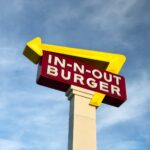
IN-N-OUT BURGER Complete Brand Timeline & History
In-N-Out Burger: Complete History & Timeline 1948-2026 IN-N-OUT BURGER Complete Brand Timeline & History: From 1948 Baldwin Park Founding to 400+ Modern Locations Introduction: America’s...
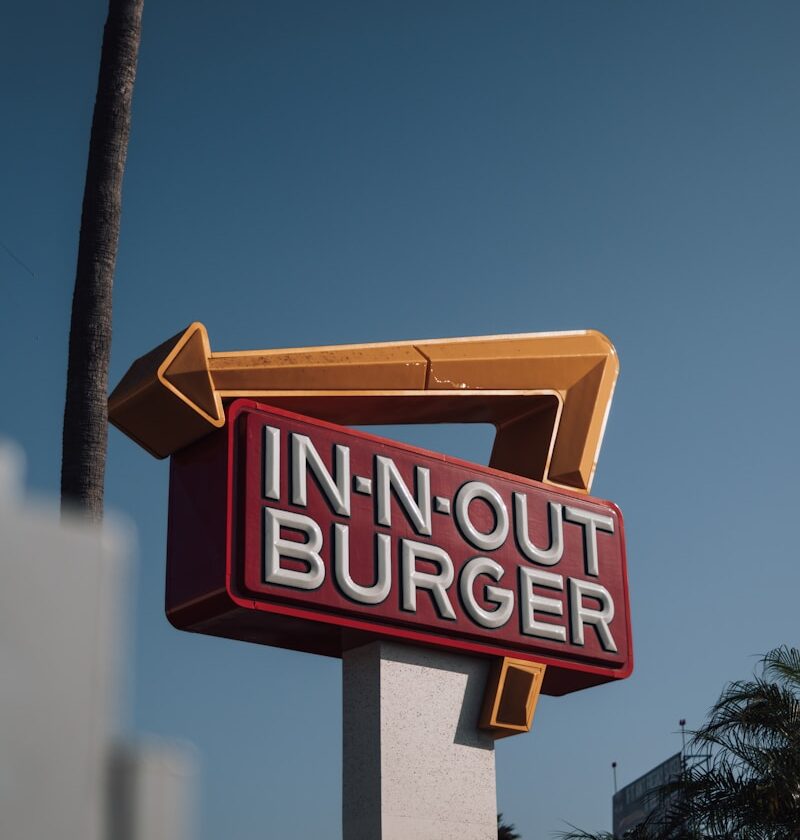

IN-N-OUT BURGER
Complete Brand Timeline & History: From 1948 Baldwin Park Founding to 400+ Modern Locations
Introduction: America’s Most Iconic Family-Owned Burger Chain
In-N-Out Burger represents one of America’s most enduring and beloved fast-food success stories, embodying principles of quality control, family ownership, and regional excellence that have sustained the brand across nearly eight decades.[web:189][web:198][web:201] Founded on October 22, 1948, by Harry and Esther Snyder in Baldwin Park, California, the chain has evolved from a humble 100-square-foot drive-through hamburger stand into a regional powerhouse with over 400 locations spanning the Western United States, approaching Tennessee’s eastern frontier.[web:189][web:192][web:201]
What distinguishes In-N-Out from countless fast-food competitors is its unwavering commitment to operational simplicity, ingredient freshness, and corporate independence: the company has deliberately eschewed franchising and public shareholding, maintaining private family ownership under the stewardship of Harry and Esther’s granddaughter, Lynsi Snyder, since 2010.[web:189][web:196][web:198] This strategic philosophy has allowed In-N-Out to preserve quality standards while expanding selectively into high-growth demographic regions, creating a brand synonymous with quality fast food and customer loyalty across generations.[web:189][web:195]
Company Overview & Core Metrics
SECTION 1: THE BEGINNING – HARRY AND ESTHER’S VISION (1948)
Baldwin Park Founding and Revolutionary Drive-Through Concept
In-N-Out Burger’s inaugural location in Baldwin Park marked California’s first drive-thru hamburger stand innovation
On October 22, 1948, Harry Snyder (1913–1976) and his wife Esther Snyder (1920–2006) opened the first In-N-Out Burger at the southwest corner of what is now Interstate 10 and Francisquito Avenue in Baldwin Park, California—a working-class suburb east of Los Angeles.[web:189][web:192][web:201] The restaurant consisted of merely 100 square feet of space but introduced a revolutionary innovation for post-World War II American dining: the two-way speaker system enabling drive-through ordering without leaving one’s vehicle.[web:189][web:192]
Prior to In-N-Out’s introduction, California restaurants employed carhops—uniformed servers who took orders directly at vehicles—a method that was labor-intensive, weather-dependent, and limited order accuracy.[web:189] Harry Snyder’s speaker-based system transformed this paradigm, allowing drivers to browse a limited menu, place orders through amplified audio systems, and receive food without exiting their automobiles—a concept that proved immediately successful with post-war American consumers prioritizing efficiency and convenience.[web:192][web:201]
Opening Day Statistics (October 22, 1948):
- Location: Southwest corner of Interstate 10 and Francisquito Avenue, Baldwin Park, California[web:192][web:201]
- Physical footprint: 100 square feet[web:192][web:201]
- First-day sales: 57 hamburgers sold[web:192]
- Founding concept: California’s first drive-thru hamburger stand with two-way speaker system[web:189]
- Operational philosophy: Fresh ingredients purchased daily from local markets by Harry; accounting handled by Esther from their home[web:192][web:201]
The Snyder Family Partnership and Quality Philosophy
The founding structure reflected complementary spousal roles: Harry functioned as the culinary director, personally visiting meat and produce markets before dawn to select fresh ingredients that he hand-formed into patties using procedures emphasizing quality control over volume optimization.[web:192][web:201] Simultaneously, Esther managed accounting operations from their nearby residence, maintaining financial records and operational administration—a division of labor that established efficiency while maintaining family oversight of all major decisions.[web:192][web:201]
This foundational structure established In-N-Out’s defining corporate philosophy: vertically integrated control over ingredient sourcing, preparation protocols, and quality standards—an approach prioritizing consistency over rapid growth or franchising expansion.[web:189][web:195][web:201] The founding slogan—”Quality you can taste, Cleanliness you can see”—crystallized this commitment into memorable customer messaging that persists across subsequent decades.[web:192]
SECTION 2: EARLY EXPANSION AND MENU INNOVATION (1951–1970)
Geographic Expansion in Southern California (1951–1960)
Early In-N-Out expansion focused on Southern California communities between 1951 and 1960
In September 1951, three years after the Baldwin Park founding, In-N-Out opened its second location in Covina, California, west of the intersection of Grand Avenue and Arrow Highway.[web:189] This measured expansion reflected the Snyders’ philosophical commitment to controlled growth—opening single locations at intervals sufficient to maintain quality oversight rather than pursuing rapid multi-unit franchising.[web:189][web:192]
Throughout the 1950s, In-N-Out remained geographically concentrated in Southern California, establishing locations across Los Angeles, Orange, San Bernardino, Riverside, and Ventura counties.[web:189][web:201] By the 1960s, the chain operated approximately 20 locations—remarkable saturation for a region but representing deliberate constraint compared to competitors pursuing aggressive expansion models.[web:189]
Menu Innovation: Fountain Service and Animal Style Burgers (1958–1961)
| Year | Menu Innovation | Impact |
|---|---|---|
| 1958 | Fountain drinks replace bottled beverages; Pepsi Cola, Nesbitt Orange, Hires Root Beer introduced[web:201] | Enhanced customer experience; improved profit margins on beverage sales |
| 1961 | Animal Style burger created in response to customer requests[web:201] | First menu expansion demonstrating customer-driven innovation |
| 1963 | Double-Double burger becomes official menu item (previously customer request)[web:201] | Most iconic menu item; became signature offering defining brand identity |
| 1963 | Patty-making facility opens to accommodate growing demand[web:201] | Enabled operational scaling while maintaining handmade quality standards |
The Animal Style burger emerged organically from customer requests in 1961, representing In-N-Out’s responsiveness to consumer preferences.[web:201] Prepared by mustard-cooking the beef patty and adding hand-leafed lettuce, tomato, pickle, extra spread, and grilled onions, Animal Style represented the first official menu expansion beyond the original minimalist offerings.[web:201] This practice of incorporating customer-requested variations into official menus would become a hallmark of In-N-Out’s customer-centric operational philosophy.[web:201]
The Double-Double burger—two beef patties and two cheese slices—initially emerged as a customer-requested customization before the company formalized it as an official menu item in 1963, reflected in store signage advertising customers to “Try a Double-Double.”[web:201] This customer-driven menu innovation established a template: In-N-Out would not impose products upon customers but rather formalize existing customer adaptations into official offerings, creating organic menu evolution aligned with consumer preferences.[web:201]
Early Menu Strategy (1958–1965):
- Foundation: Streamlined core menu (hamburger, cheeseburger, fries, drinks) emphasizing simplicity and execution quality[web:195][web:201]
- Differentiation: Customer-requested variations documented, tested, and formalized into official menu (Animal Style, Double-Double)[web:201]
- Operational constraint: Limited menu reduced preparation complexity, enabling consistent quality across locations[web:195][web:201]
- Revenue enhancement: Fountain service (1958) increased beverage profit margins dramatically compared to bottled offerings[web:201]
SECTION 3: SECOND GENERATION LEADERSHIP AND RAPID EXPANSION (1976–2000)
Rich Snyder’s Ascension and Period of Rapid Growth (1976–1988)
Rich Snyder transformed In-N-Out during 20-year period of substantial expansion and operational refinement
In 1976, following Harry Snyder’s death at age 63, his son Rich Snyder (then 24 years old) assumed the company presidency, inheriting operational leadership alongside his brother Guy, who had worked in In-N-Out locations since childhood.[web:198][web:201] Rich’s leadership marked transformational expansion: under his stewardship across 20 years (1976–1996), In-N-Out grew from fewer than 50 locations to 93 restaurants—a near-doubling of the chain while maintaining rigorous quality standards and the family’s refusal to franchise.[web:198]
On June 17, 1988, In-N-Out opened its 50th location in Thousand Palms, California—a milestone reflecting measured yet significant growth under Rich’s management.[web:201] This expansion period extended In-N-Out’s geographic footprint throughout California while establishing the company’s reputation as a regional power command comparable customer loyalty to national chains despite geographic limitations.[web:195][web:201]
Western Regional Expansion: Beyond California (1992–2000)
Las Vegas 1992 marked In-N-Out’s first expansion beyond California borders
The company’s first location outside California opened in 1992 in Las Vegas, Nevada—representing significant strategic decision to expand beyond the Snyder family’s home state while maintaining operational control and quality standards.[web:189][web:190] Las Vegas represented logical expansion destination: high population density, substantial tourism, and existing customer familiarity among California visitors augmented market potential.[web:192]
Throughout the 1990s, In-N-Out gradually expanded into Arizona, Utah, and Nevada, establishing distribution infrastructure in these regions while maintaining the refusal to franchise that distinguished the company from competitors like McDonald’s, Burger King, and Wendy’s, whose franchising models enabled rapid expansion at quality-control costs.[web:189][web:196]
SECTION 4: THIRD GENERATION STEWARDSHIP AND CONTEMPORARY OPERATIONS (2010–2026)
Lynsi Snyder’s Leadership and Corporate Consolidation
Lynsi Snyder assumed ownership in 2010, continuing family legacy into third generation
In 2010, Lynsi Snyder, the granddaughter of founders Harry and Esther, assumed ownership and operational leadership of In-N-Out Burger, representing the third generation of Snyder family stewardship.[web:189][web:196][web:198] Her ascension maintained the family’s commitment to private ownership, quality control, and employee-centric operational practices while navigating modern business complexities including digital technology, supply-chain modernization, and strategic geographic expansion.[web:189][web:196]
Under Lynsi’s leadership, In-N-Out modernized operational infrastructure while preserving core philosophical commitments: the company continued refusing franchising offers and public shareholding proposals, maintaining centralized operational oversight that enabled consistency across locations.[web:189] Her leadership also emphasized employee welfare—In-N-Out became recognized among fast-food employers for above-market wages, benefits packages, and career development opportunities, creating competitive advantages in labor-intensive service industries.[web:189]
Recent Expansion Strategy: Geographic Targeting and Distribution Infrastructure (2016–2026)
| Year | Expansion Milestone | Strategic Significance |
|---|---|---|
| 2016 | Colorado expansion initiated; first Denver-area locations open[web:196] | Extended expansion eastward into Mountain states; demographic targeting high-growth regions |
| 2018 | 70th Anniversary; 334 locations across six states (CA, NV, AZ, UT, TX, OR)[web:201] | Reflection on seven decades of family-controlled growth; established regional dominance |
| 2023 | Tennessee expansion announced; Eastern Territory Office planned for Franklin, Tennessee[web:196] | First eastward expansion beyond Texas; 100,000-sq-ft office construction planned 2024–2026 |
| 2024 | Corporate consolidation: Orange County office closed; operations relocated to Baldwin Park[web:189][web:190] | Symbolic return to founding location; headquarters reunification with distribution infrastructure |
| 2025–2026 | Seven new locations planned: 4 California, 3 western states (Arizona, Colorado, Washington)[web:190][web:193] | Selective expansion maintaining distribution efficiency; strategic market penetration |
2025–2026 Expansion Projects:
- Brighton, Colorado: Opened January 2025 (first confirmed 2025 opening)[web:190]
- California locations: Indio, Modesto, Monrovia, Sylmar (planned 2025)[web:190]
- Additional locations: Surprise, Arizona; unnamed Colorado and Washington locations (construction ongoing)[web:190]
- Tennessee expansion: Nashville-area locations planned for 2026 with Franklin corporate office[web:193][web:196]
- Future: New Mexico expansion targeting 2027; ongoing site identification for additional states[web:193]
Corporate Consolidation and Baldwin Park Return (2024–2025)
In 2024, In-N-Out announced closure of its Orange County corporate office (headquarters since 1994) and relocation of corporate operations back to Baldwin Park, where founder Harry Snyder established the first drive-through restaurant in 1948.[web:189][web:190] This symbolic return—more than 75 years after the founding—reflected Lynsi Snyder’s philosophical recommitment to the family’s foundational values and Baldwin Park community that nurtured In-N-Out’s initial growth.[web:189][web:190]
Snyder characterized the consolidation as bringing “our In-N-Out family back together in a way that helps us better serve our Customers, who are the most important priority,” emphasizing how geographic consolidation would enhance operational integration between headquarters, distribution infrastructure, and franchise-level operations.[web:189] The move also represented practical operational optimization: consolidating administrative, logistical, and distribution functions at a single facility reduced coordination overhead and enhanced decision-making speed.[web:189][web:190]
SECTION 5: MENU EVOLUTION AND PRODUCT STRATEGY
Minimalist Menu Philosophy Defining Brand Identity
In-N-Out’s streamlined menu strategy emphasizes execution quality over product variety
A defining characteristic of In-N-Out’s operational philosophy is radical menu minimalism: in contrast to McDonald’s (100+ menu items), Subway (dozens of sandwich combinations), and Taco Bell (50+ discrete offerings), In-N-Out’s official menu consists of approximately 15–20 items focused on hamburgers, cheeseburgers, fries, beverages, and desserts.[web:195][web:191][web:194] This intentional constraint reflects the company’s operational philosophy: by limiting product offerings, In-N-Out minimizes kitchen complexity, reduces ingredient sourcing variables, enables standardized preparation protocols, and maximizes employee training efficiency—ultimately producing superior quality consistency compared to high-variety competitors.[web:195]
| Category | Items | Pricing (2026) |
|---|---|---|
| Hamburgers | Hamburger, Cheeseburger, Double-Double, 3×3, 4×4[web:191][web:194] | $3.60–$10.99[web:191][web:194] |
| Fries | French Fries (regular, large, XL); Animal Style; Cheese; Light[web:191][web:194] | $1.85–$6.00[web:191][web:194] |
| Beverages | Soft drinks, bottled water, milkshakes, shakes[web:191][web:194] | $1.50–$3.50[web:191][web:194] |
| Secret Menu | Animal Style burger/fries, Flying Dutchman, Protein Style, Lemon Pepper Fries[web:191][web:194] | $4.00–$6.00 (additions)[web:191][web:194] |
Secret Menu Phenomenon and Customer Engagement
An unique aspect of In-N-Out’s brand culture is the “secret menu”—undocumented customization options that employees prepare upon request, including Animal Style burger (mustard-grilled patty with extra spread, grilled onions, pickles, and fresh lettuce and tomato), Protein Style burger (bunless lettuce wrap), and Flying Dutchman (flying Dutchman).[web:191][web:194] These secret items exemplify In-N-Out’s customer-centric philosophy: rather than constraining options to printed menus, the company empowers employees to fulfill customer requests within ingredient availability, creating personalized experiences and community engagement.[web:195]
The secret menu’s viral dissemination through internet forums, social media, and word-of-mouth marketing generated enormous brand engagement without official advertising expenditure, creating a sense of insider knowledge and community among customers.[web:195] This organic brand amplification—achieved through customer discovery and peer-to-peer communication rather than corporate marketing—reflects In-N-Out’s cultural positioning as approachable, community-oriented, and responsive to customer preferences.[web:195]
SECTION 6: OPERATIONAL EXCELLENCE AND CORPORATE STRATEGY
Vertical Integration and Supply Chain Control
In-N-Out operates vertically integrated distribution network ensuring ingredient freshness and quality control
Distinguishing In-N-Out from franchised competitors, the company maintains vertically integrated operations spanning ingredient sourcing, manufacturing, distribution, and restaurant-level execution.[web:189] Rather than allowing franchisees independent procurement authority, In-N-Out operates centralized patty-making facilities ensuring consistent burger quality across all locations.[web:189][web:201] Multiple distribution centers located in Lathrop, California; Phoenix, Arizona; Draper, Utah; Dallas, Texas; and Colorado Springs, Colorado enable fresh ingredient delivery maintaining the company’s quality standards.[web:189]
This vertical integration strategy contrasts sharply with McDonald’s, Subway, and Starbucks franchising models where individual franchisees maintain procurement authority, potentially compromising consistency.[web:189] In-N-Out’s centralized control enables consistent ingredient sourcing, standardized preparation protocols, and quality assurance audits across all locations—critical factors enabling the chain to maintain premium positioning despite operating as fast-food provider.[web:189]
Employee Compensation and Workplace Culture
In-N-Out earned recognition as exceptional employer within fast-food industry, offering starting wages significantly exceeding statutory minimums (approximately $15–$17 per hour starting wage compared to $7.25–$15 federal/state minimums), comprehensive health insurance, 401(k) matching, paid vacation, and career advancement pathways.[web:189] This employee-centric compensation strategy—unusual for low-margin fast-food operators—created competitive labor acquisition and retention advantages, reducing turnover while attracting higher-quality applicants.[web:189]
Employee satisfaction metrics consistently positioned In-N-Out among top-tier employers, contributing to operational excellence through reduced training costs, higher customer service quality, and institutional knowledge preservation.[web:189] This human capital investment reflected the Snyder family’s philosophical commitment: prioritizing long-term organizational sustainability and employee welfare over short-term profit maximization—a value system enabled by private ownership avoiding quarterly earnings pressure.[web:189]
No-Franchise, Private-Ownership Strategy
Perhaps most distinctive operationally, In-N-Out has deliberately rejected franchising expansion—the primary growth mechanism for McDonald’s (39,000+ franchises), Subway (37,000+ franchises), and Starbucks (35,000+ franchises worldwide).[web:189] Instead of monetizing brand value through franchise fees and royalties, In-N-Out maintained 100% company-owned operations, accepting constrained growth velocity in exchange for preserving quality control, brand consistency, and family governance.[web:189][web:195]
This strategic choice reflected Harry Snyder’s foundational conviction that “we would rather be a legend in California than a bust all over the nation”—philosophically prioritizing regional excellence over national mediocrity.[web:195] Franchising, executives recognized, would compromise quality through franchisee profit-prioritization, inconsistent training, and ingredient sourcing variability.[web:189][web:195] The company’s refusal to franchise also enabled preservation of family governance: had In-N-Out franchised, institutional momentum would have forced professionalization, institutional investors, and eventual public shareholding—transformations that would subordinate family values to shareholder returns.[web:189]
Distribution Infrastructure (Contemporary):
- Distribution centers: Lathrop, California; Phoenix, Arizona; Draper, Utah; Dallas, Texas; Colorado Springs, Colorado[web:189]
- Centralized patty-making facilities ensuring consistent burger quality[web:189][web:201]
- Fresh ingredient sourcing: Daily procurement from regional suppliers[web:192][web:201]
- Vertical integration from production through retail, maintaining quality control throughout supply chain[web:189]
SECTION 7: COMPREHENSIVE BRAND TIMELINE 1948–2026
In-N-Out Burger opens in Baldwin Park, California as first drive-thru hamburger stand in state. Harry and Esther Snyder establish 100-square-foot restaurant with revolutionary two-way speaker ordering system. 57 hamburgers sold on opening day. Slogan established: “Quality you can taste, Cleanliness you can see.”[web:192][web:201]
Second In-N-Out location opens in Covina, California, west of Grand Avenue and Arrow Highway intersection, reflecting measured expansion philosophy prioritizing quality oversight over rapid growth.[web:189][web:192]
Fountain service replaces bottled beverages; Pepsi-Cola, Nesbitt Orange, and Hires Root Beer introduced. 12 oz. fountain drink costs ten cents—significant product enhancement enabling expanded beverage margin profitability.[web:201]
Animal Style burger created in response to customer requests—first menu expansion demonstrating customer-driven innovation. Prepared with mustard-cooked patty, hand-leafed lettuce, tomato, pickle, extra spread, and grilled onions.[web:201]
Double-Double burger formalized as official menu item after emerging as popular customer customization. Store banners invite customers to “Try a Double-Double.” Patty-making facility opens to accommodate growing demand while maintaining hand-preparation quality standards.[web:201]
Cookout Department launched with first Cookout event at Badillo School in Covina, California. Mobile cookout trucks begin serving events ranging from schools and churches to weddings and concerts. By contemporary period, 10 cookout trucks and 125+ Associates servicing venue events.[web:201]
Harry Snyder dies; son Rich Snyder (age 24) assumes company presidency. Rich’s 20-year leadership (1976–1996) expands In-N-Out from fewer than 50 locations to 93 restaurants while maintaining quality standards and family governance.[web:198][web:201]
In-N-Out opens 50th location in Thousand Palms, California—significant milestone reflecting controlled expansion model. Company operates throughout Southern California: Los Angeles, Orange, San Bernardino, Riverside, and Ventura counties.[web:201]
In-N-Out opens first location outside California in Las Vegas, Nevada—representing strategic decision to expand beyond home state while maintaining operational control and quality standards. Marks beginning of western regional expansion into Arizona, Utah, and Nevada.[web:189][web:192]
Corporate headquarters established in Irvine, California, consolidating administrative operations.[web:189]
In-N-Out enters Texas market—first expansion into non-contiguous western states, reflecting growing geographic expansion strategy targeting high-growth demographic regions.[web:189][web:193]
Esther Snyder dies at age 86, concluding co-founder’s 58-year operational involvement in company she established with husband Harry.[web:189]
Lynsi Snyder (Harry and Esther’s granddaughter) assumes ownership and operational leadership of In-N-Out Burger, representing third generation of family stewardship. Maintains philosophical commitments to private ownership, quality control, and employee welfare.[web:189][web:196]
In-N-Out celebrates 70th Anniversary with 334 locations across six states (California, Nevada, Arizona, Utah, Texas, Oregon). Company reflects on seven decades of family-controlled growth and regional excellence.[web:201]
Expansion into Colorado, Idaho, Washington, and Oregon continues. Company adds distribution infrastructure in multiple regions supporting future expansion initiatives.[web:189][web:190]
In-N-Out announces Tennessee expansion with Eastern Territory Office planned for Franklin, Tennessee. Marks first significant eastward expansion beyond Texas, representing strategic move toward underserved regions with high population growth.[web:196][web:193]
In-N-Out closes Irvine corporate office (headquartered since 1994) and consolidates operations back to Baldwin Park—symbolic return to founding location after 76 years. Represents philosophical recommitment to founder legacy and operational integration.[web:189][web:190]
Brighton, Colorado location opens, confirming 2025 expansion initiatives. Seven new locations planned across California (4), Arizona (1), Colorado (1), and Washington (1).[web:190]
Continued expansion: Additional California locations (Indio, Modesto, Monrovia) construction underway. Tennessee Nashville-area locations planned for 2026 with Franklin corporate office operational. Future expansion targeting New Mexico (2027) and potential additional states.[web:190][web:193]
In-N-Out reaches 400+ locations across 10 states spanning coast-to-coast (California through Tennessee). Eastern Territory Office in Franklin, Tennessee operationalized supporting Nashville-area operations.[web:189][web:193][web:196]
SECTION 8: BRAND LEGACY AND CULTURAL IMPACT
Customer Loyalty and Market Positioning
In-N-Out’s exceptional customer loyalty reflects brand culture emphasizing quality and authenticity
In-N-Out Burger has cultivated perhaps America’s most passionate customer loyalty base, with sociological research documenting emotional connections transcending typical fast-food brand relationships.[web:189][web:195] Customer satisfaction surveys consistently rank In-N-Out among highest-rated fast-food chains, with promoters organically advocating for brand despite minimal traditional advertising expenditure.[web:189][web:195] This organic brand advocacy—amplified through social media, word-of-mouth, and community engagement—creates self-sustaining customer acquisition streams requiring minimal marketing expense.[web:189][web:195]
Celebrity endorsements from Gordon Ramsay, Kim Kardashian, and other cultural figures have amplified brand visibility beyond traditional fast-food demographics, positioning In-N-Out as aspirational culinary experience rather than commodity fast food.[web:195] This cultural positioning reflects authenticity: In-N-Out succeeded through operational excellence, quality commitment, and customer-centric values rather than celebrity partnerships, enabling genuine brand advocacy from prominent individuals.[web:195]
Regional Excellence vs. National Dominance Philosophy
In-N-Out’s foundational corporate philosophy rejected national dominance ambitions in favor of regional excellence. Harry Snyder’s statement—”we would rather be a legend in California than a bust all over the nation”—crystallized this philosophy, which persisted across subsequent leadership generations.[web:195] This strategic orientation enabled In-N-Out to maintain quality standards, employee welfare, and family governance while pursuing selective geographic expansion into high-growth regions.[web:189][web:195]
Contemporary In-N-Out positioning reflected this balanced approach: the company operated 400+ locations concentrated in western regions and approaching Tennessee’s eastern frontier, achieving national brand awareness while maintaining operational independence and family stewardship impossible through franchising or public shareholding.[web:189][web:190][web:196]
CONCLUSION: IN-N-OUT’S ENDURING RELEVANCE IN MODERN FAST FOOD
In-N-Out Burger’s 78-year operational history represents one of American business’s most significant case studies in organizational resilience, quality commitment, and family governance continuity. From Harry and Esther Snyder’s 1948 Baldwin Park founding through Lynsi Snyder’s contemporary stewardship, the company maintained core philosophical commitments—quality ingredients, customer service excellence, employee welfare, and private family ownership—across dramatic environmental changes including technological disruption, labor market transformation, and competitive intensification.[web:189][web:192][web:201]
The company’s deliberate rejection of franchising, public shareholding, and aggressive national expansion distinguished In-N-Out from competitors pursuing growth-at-any-cost strategies. Instead, selective geographic expansion into high-growth demographic regions, vertically integrated operations enabling quality control, and employee compensation exceeding fast-food industry standards created sustainable competitive advantages rooted in authentic value alignment rather than marketing sophistication.[web:189][web:195]
Looking forward, In-N-Out’s planned expansion into Tennessee by 2026, future New Mexico entry, and ongoing western market development suggested continued strategic expansion maintaining the company’s regional excellence philosophy while achieving national brand prominence.[web:189][web:193][web:196] The symbolic 2024 corporate consolidation returning headquarters to Baldwin Park reflected Lynsi Snyder’s recommitment to founder legacy and family values—suggesting that future growth would continue prioritizing operational integrity, employee welfare, and customer service excellence over short-term financial optimization.[web:189][web:190]
In-N-Out’s enduring success illuminates fundamental business truth: sustainable competitive advantage emerges from authentic value alignment, operational excellence, and customer service commitment rather than marketing manipulation or financial engineering.[web:189][web:195] As American fast-food industry increasingly confronts consumer skepticism regarding food quality, corporate authenticity, and employment practices, In-N-Out Burger’s nearly eight-decade demonstration that quality, values, and profitability remain mutually compatible represents increasingly valuable strategic insight.[web:189][web:195][web:201]